Chinoiserie Toile Christmas Patterns
The holiday season is often defined by a specific visual language. For many, this means red and green stripes, snowflakes, or generic reindeer silhouettes. However, there is a distinct aesthetic that bridges the gap between historical elegance and festive cheer: Chinoiserie Toile Christmas Patterns. This style merges the intricate, narrative-driven structure of traditional French toile de Jouy with the exotic, whimsical motifs of Chinoiserie art, all set against a backdrop of winter celebration.
For creators, designers, and small business owners, incorporating these patterns offers more than just decoration; it provides a sophisticated storytelling tool. Unlike mass-produced clipart, Chinoiserie-inspired designs carry weight. They suggest heritage, craftsmanship, and a curated eye for detail. Whether you are designing packaging for a boutique candle line, creating digital invitations, or developing textile collections for home decor, understanding how to leverage this specific aesthetic can elevate your projects from simple to memorable.
Understanding the Aesthetic Fusion
To effectively use these patterns, one must first appreciate what they represent. Traditional toile originated in 18th-century France, characterized by monochromatic scenes depicting rural life or pastoral landscapes on a white background. Chinoiserie, emerging around the same time, was Europe’s romanticized interpretation of Chinese and East Asian artistic styles, featuring pagodas, exotic birds, and delicate flora.
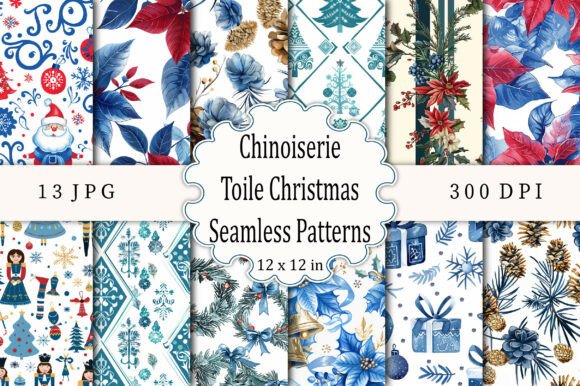
Chinoiserie Toile Christmas Patterns fuse these two traditions. Imagine the classic single-color scrollwork of toile, but instead of farmers harvesting grapes, the scene depicts figures in period attire exchanging gifts beneath stylized pine trees, surrounded by porcelain lanterns and winter flora. The result is a pattern that feels both timeless and seasonally appropriate without being cliché.
This fusion appeals to an audience that values history and artistry. It resonates with adults aged 20–50 who are increasingly drawn to "slow living" aesthetics, vintage revival, and meaningful design. By choosing this style, you signal that your product or content is thoughtful and refined.
Creative Applications Across Industries
The versatility of high-resolution Chinoiserie Toile Christmas Patterns makes them suitable for a wide array of professional and personal projects. Because the format typically includes unique files at 12×12 inches and 300 DPI, the quality is sufficient for both digital screens and large-format printing.
- Packaging Design: Small business owners selling artisanal goods—such as handmade soaps, baked treats, or specialty teas—can use these patterns for gift boxes, wrapping paper, or hang tags. The intricate details hold up well at close range, encouraging customers to inspect the package closely.
- Digital Marketing & Blogging: Content creators and bloggers can utilize these images for featured posts, newsletter headers, or social media graphics. The elegant nature of the design helps break up text-heavy layouts while maintaining a cohesive brand voice. It is particularly effective for lifestyle blogs focusing on home decor, fashion, or travel.
- Textile & Home Decor: Entrepreneurs in the home goods space can adapt these patterns for throw pillows, table runners, or curtains. The monochromatic nature of most toile designs allows for easy color customization. A designer might swap the traditional navy or black for a deep forest green or burgundy to better fit modern interior trends.
- Event Stationery: For educators, event planners, or individuals hosting private gatherings, these patterns work beautifully for wedding invitations (for winter weddings), holiday party save-the-dates, or place cards. The formal tone adds a touch of grandeur to any event.
Technical Advantages for Creators
When sourcing digital assets, the technical specifications matter just as much as the visual appeal. The provision of 13 unique JPG files ensures variety without overwhelming the user. Having multiple variations allows for a mixed-media approach, where different patterns can be layered or used across different elements of a campaign to maintain visual interest.
The 12×12 inch dimension is a standard industry size, particularly useful for scrapbooking, card making, and web design grids. It provides ample canvas space for the detailed imagery typical of Chinoiserie styles, ensuring that no critical narrative element is cut off during cropping. Furthermore, the 300 DPI resolution is the gold standard for print. This ensures that when you send your designs to a printer, the lines remain crisp and the textures clear, avoiding the pixelation that often ruins low-quality digital downloads.
Strategies for Implementation
Incorporating these patterns requires a strategic approach to ensure they enhance rather than distract from your core message. Here are practical ways to integrate Chinoiserie Toile Christmas Patterns into your workflow:
- Color Palette Consistency: Since toile patterns are often monochromatic, they act as a neutral base. Choose a primary color palette for your project (e.g., cream, gold, and emerald) and apply it to the pattern or use the pattern alongside solid blocks of these colors. This creates harmony and prevents the intricate design from clashing with other elements.
- Whitespace Management: Do not overwhelm the viewer. Use the pattern as a border, a background texture with reduced opacity, or a focal point on a single item. If using it as a background, ensure there is enough contrast for text legibility. Consider placing a semi-transparent overlay on top of the image if you need to add headlines or calls to action.
- Contextual Relevance: Ensure the imagery aligns with your brand values. Chinoiserie Toile suggests a sense of calm, order, and tradition. It may not be the best fit for high-energy, discount-focused promotions. Instead, use it for brands emphasizing quality, heritage, or relaxation.
- Layering Techniques: Experiment with layering. Place a smaller, solid-colored icon or logo over the patterned background. Or, use the pattern as a watermark behind text to add depth without sacrificing readability.
Maintaining Originality and Professionalism
While these patterns provide a strong foundation, it is crucial to add your own creative signature. Avoid simply slapping the image onto a product and calling it done. Customize the context. If you are a blogger, pair the pattern with custom typography that reflects your unique voice. If you are a designer, consider modifying the color scheme to match current seasonal trends.
Respect the integrity of the artwork. Do not stretch or distort the 12×12 inch images, as this will degrade the aspect ratio and blur the fine details. Always work with the original high-resolution files to preserve the sharpness of the lines. Additionally, ensure you understand the licensing terms associated with the files. Most creative assets allow for commercial use, but some may require attribution or restrict certain types of resale. Clear communication with your audience about the quality and origin of your materials builds trust.
Conclusion
Chinoiserie Toile Christmas Patterns offer a sophisticated alternative to standard holiday graphics. By combining historical art forms with festive themes, they provide a rich visual resource for professionals seeking to stand out. With their high resolution, versatile sizing, and unique aesthetic, these files empower creators to produce work that is not only beautiful but also commercially viable.
Whether you are crafting a bespoke gift box, designing a digital newsletter, or updating your social media presence, integrating these patterns can add a layer of elegance and narrative depth to your work. The key lies in thoughtful application, consistent branding, and a respect for the intricate details that make this style so enduring. Explore the 13 unique files provided, experiment with different layouts, and discover how this timeless aesthetic can bring a new level of polish to your Christmas projects.