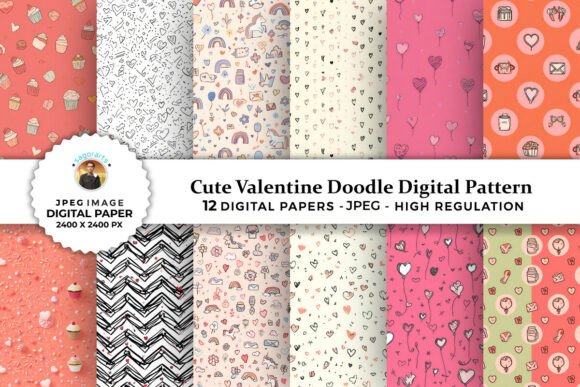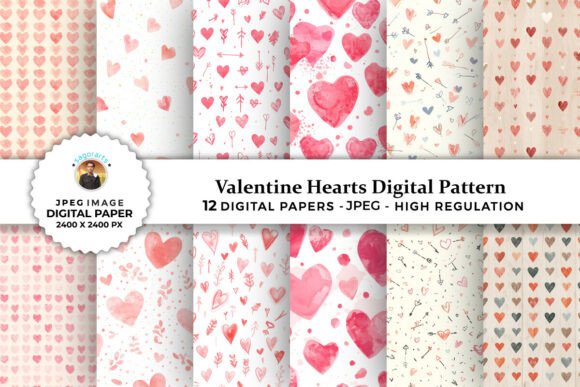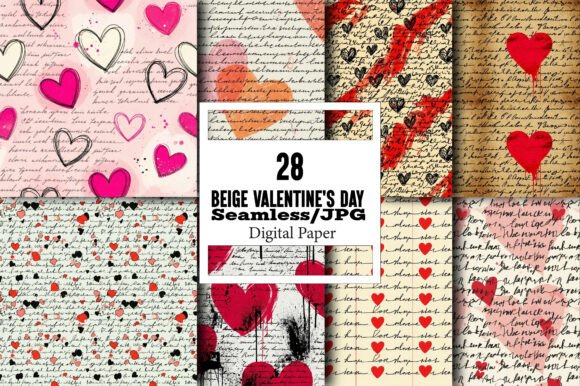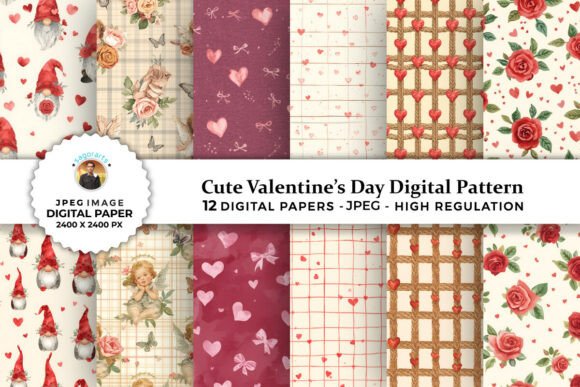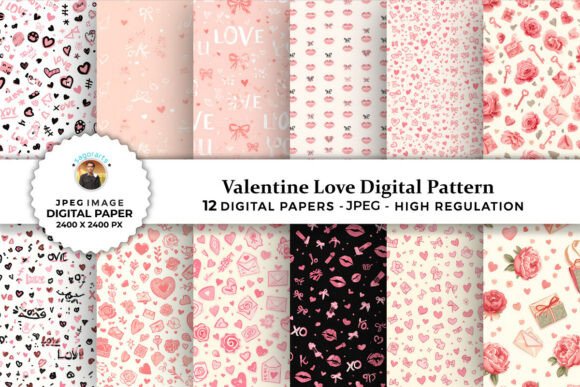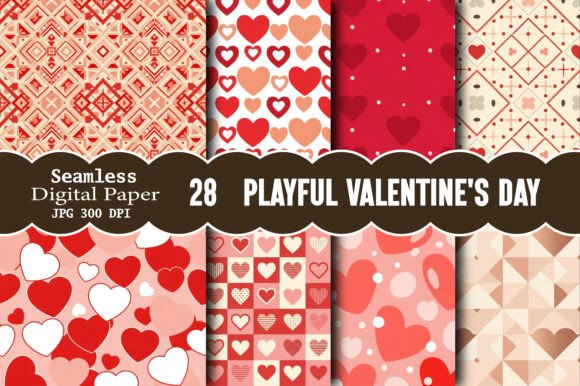
Playful Valentine’s Day Patterns
Valentine’s Day often feels like a season dominated by rigid traditions: standard red hearts, predictable cupids, and mass-produced greeting cards. However, for designers, small business owners, and creative hobbyists, there is a distinct opportunity to break away from the cliché and inject personality into seasonal projects. This is where Playful Valentine’s Day Patterns step in as a versatile design asset. These are not merely decorative backgrounds; they are whimsical, high-resolution seamless designs crafted to elevate everyday items and digital spaces with a touch of modern charm.
The visual language of these patterns leans heavily into a lighthearted, energetic aesthetic. Rather than relying on heavy, gothic romanticism or overly saccharine pastels, the designs typically feature dynamic compositions that balance boldness with approachability. You might see stylized heart motifs intertwined with abstract shapes, playful typography elements, or charming illustrative details that feel both nostalgic and contemporary. The overall appeal lies in their adaptability—they possess enough character to stand alone as focal points but remain subtle enough to serve as supportive textures in larger compositions.
Beyond the Greeting Card: Real-World Applications
One of the most significant advantages of using seamless patterns like these is their scalability across multiple mediums. In the realm of physical products, these graphics transform mundane items into memorable brand experiences. Consider the world of print-on-demand or small-batch manufacturing. Applying these patterns to tote bags creates an instant conversation starter, while notebook covers become personalized artifacts rather than generic stationery. For those involved in home decor, designing personalized pillows or unique scrapbook decoupage pieces allows for a high degree of customization that resonates with gift-givers looking for something truly special.
The utility extends seamlessly into party planning and event design. Instead of searching for disparate clip-art elements that rarely match, creators can use these consistent patterns to unify their theme. Imagine coordinating party napkins, plates, and even custom candle or soap labels under one cohesive visual umbrella. This level of consistency is crucial for professional branding, whether you are hosting a corporate mixer or a intimate gathering. The ability to resize these files without losing quality—thanks to their high-resolution, 300 DPI specifications—ensures that your designs look crisp whether they are printed on a tiny product label or scaled up for large-format banners.
For digital creators, the applications are equally robust. Social media backgrounds require eye-catching visuals that stop the scroll. A well-designed pattern provides a textured backdrop that makes text overlays pop, enhancing readability while maintaining aesthetic appeal. Similarly, website graphics benefit from the addition of such assets to break up white space and add depth to landing pages. Even functional items like tumblers and mugs can be transformed through sublimation printing, turning daily rituals into moments of joy. Furthermore, the potential for creating unique merchandise, such as custom decks of playing cards or wind spinners, opens up new revenue streams for entrepreneurs looking to diversify their inventory during the peak Valentine’s season.
Technical Specifications and Workflow Efficiency
From a technical standpoint, the convenience of receiving these assets in JPG format cannot be overstated. While vector files offer infinite scalability, JPGs are universally compatible with almost all design software, from Adobe Creative Cloud to Canva and Procreate. The absence of watermarks is a critical factor for commercial use, allowing designers to integrate the patterns directly into their workflows without the need for tedious editing or cleanup processes. Because the files are seamless, they can be tiled infinitely, making them ideal for wrapping paper, fabric prints, or extensive web backgrounds.
When integrating these patterns into a broader design system, it is important to consider how they interact with other typographic and graphic elements. If your project involves a lot of text, such as in editorial design or detailed packaging design, ensure that the pattern does not compete with the content. Often, using the pattern as a background layer with reduced opacity or confined to specific margins can create a sophisticated hierarchy. Conversely, if the goal is to make a bold statement, such as on a t-shirt design or a primary social media graphic, letting the pattern take center stage can drive strong audience engagement.
Strategic Selection for Brand Identity
Choosing the right design asset is a strategic decision that impacts brand perception. Playful Valentine’s Day Patterns communicate warmth, creativity, and accessibility. They suggest that a brand is approachable and fun, which can be particularly effective for businesses targeting younger demographics or those in the lifestyle, craft, and entertainment sectors. However, this playfulness must be balanced with professionalism. For instance, when designing wedding invitations or planner decor, the whimsical nature of the pattern should complement the elegance of the occasion rather than undermine it. Selecting patterns with cleaner lines or more muted color palettes can achieve this balance, ensuring that the final product feels refined yet festive.
For marketers and bloggers, these patterns offer a quick way to refresh existing content. Updating old blog post headers, email newsletter backgrounds, or Pinterest pins with fresh, thematic graphics can significantly improve click-through rates. The key is consistency. By establishing a library of seasonal assets like these, brands can maintain a recognizable visual identity throughout the year. When Valentine’s Day arrives, the transition feels natural and expected, reinforcing brand loyalty through familiar yet novel visual cues.
It is also worth noting the importance of testing. Before committing to a full production run of printed goods, always test the pattern at various sizes and resolutions. What looks vibrant on a screen may appear muddy when printed on certain materials. Checking the contrast between the pattern and any overlaid text is essential for readability. Additionally, consider the emotional response the colors evoke. While traditional reds and pinks are safe bets, exploring variations that include soft purples, warm yellows, or even deep burgundies can help your design stand out in a crowded market.
Maximizing Creative Potential
The true power of these design assets lies in their versatility. They are not limited to a single use case. A designer might use a portion of the pattern as a texture overlay in Photoshop, combine it with hand-drawn elements in Illustrator, or print it directly onto vinyl for decals. This flexibility encourages experimentation. Hobbyists can explore junk journaling, adding layers of texture and history to their personal albums. Entrepreneurs can create cohesive product lines that tell a story. Content creators can produce engaging tutorials showcasing different ways to utilize the same set of graphics.
Ultimately, the goal is to imbue everyday items with a little magic. Whether you are designing a simple card or a complex brand identity, the right visual elements can elevate the entire project. Playful Valentine’s Day Patterns provide a foundation for creativity that is both sturdy and inspiring. By understanding their strengths and applying them thoughtfully, you can create designs that resonate with audiences, drive engagement, and bring a sense of joy to the recipient. In a digital landscape saturated with generic content, offering something unique and well-crafted is the best way to capture attention and build lasting connections.